
George K. Rahdert
1950–2025 · Founder
Yale Law School, 1975. Two cases won before the U.S. Supreme Court. Nearly five decades of practice in St. Petersburg.



George Rahdert came to St. Petersburg with a degree from Duke, a law degree from Yale Law School, earned in 1975, and a clerkship on the United States Court of Appeals for the Fifth Circuit behind him. He founded the firm in the 1970s and practiced here for nearly five decades.
A lawyer, first.
In the courtroom he was careful and unhurried, and he took on cases that reached well beyond this city. Twice he stood before the U.S. Supreme Court: once for a schoolteacher who had lost her job because of a contagious disease, and once for a newspaper that had printed the truth. Both times the Court agreed with him. For decades he was the lawyer newsrooms called when a story, a subpoena or a public-records fight landed on deadline.
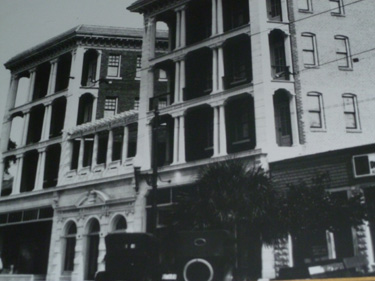
Outside the courtroom he was a builder. He restored historic properties downtown, among them the Alexander Building, where the firm still practices, and he was a founding supporter of the Palladium Theater. He also represented the Lutheran Church and built a second career as an entrepreneur and real estate developer. Asked about it all in a 2003 profile, he kept it simple: he liked being a lawyer.
He died in St. Petersburg on December 8, 2025.

Two cases before the U.S. Supreme Court
School Board of Nassau County v. Arline
480 U.S. 273 · 1987
He represented Gene Arline, a teacher dismissed because of a contagious disease. The Court held, 7–2, that Section 504 of the Rehabilitation Act protects people with contagious diseases, a landmark in disability-rights law.
The Florida Star v. B.J.F.
491 U.S. 524 · 1989
He represented the newspaper. The Court ruled, 6–3, that a paper could not be punished for publishing truthful information it had lawfully obtained, a lasting protection for the press.

RM-66 · The newsroom
Counsel to the press.
For decades he served as counsel to the St. Petersburg Times, now the Tampa Bay Times, including its defense against Robert M. Bass's attempted takeover, and to the Poynter Institute on defamation, open-records and open-meetings matters.
He also represented reporter Tim Roche, jailed in the 1990s for refusing to reveal a confidential source. The case helped lead to Florida's 1998 journalist shield law.
Preservation
He left downtown better than he found it.
Long before downtown St. Petersburg's revival, he was restoring its buildings. The Alexander Building, built in 1919 and listed on the National Register of Historic Places in 1984, is the best known of them, and it is still the firm's home. He restored other historic downtown properties too, and he was a founding supporter of the Palladium Theater.